QManD
Quantum Materials and nanoDevices group at Chalmers University
Research

Quantum materials
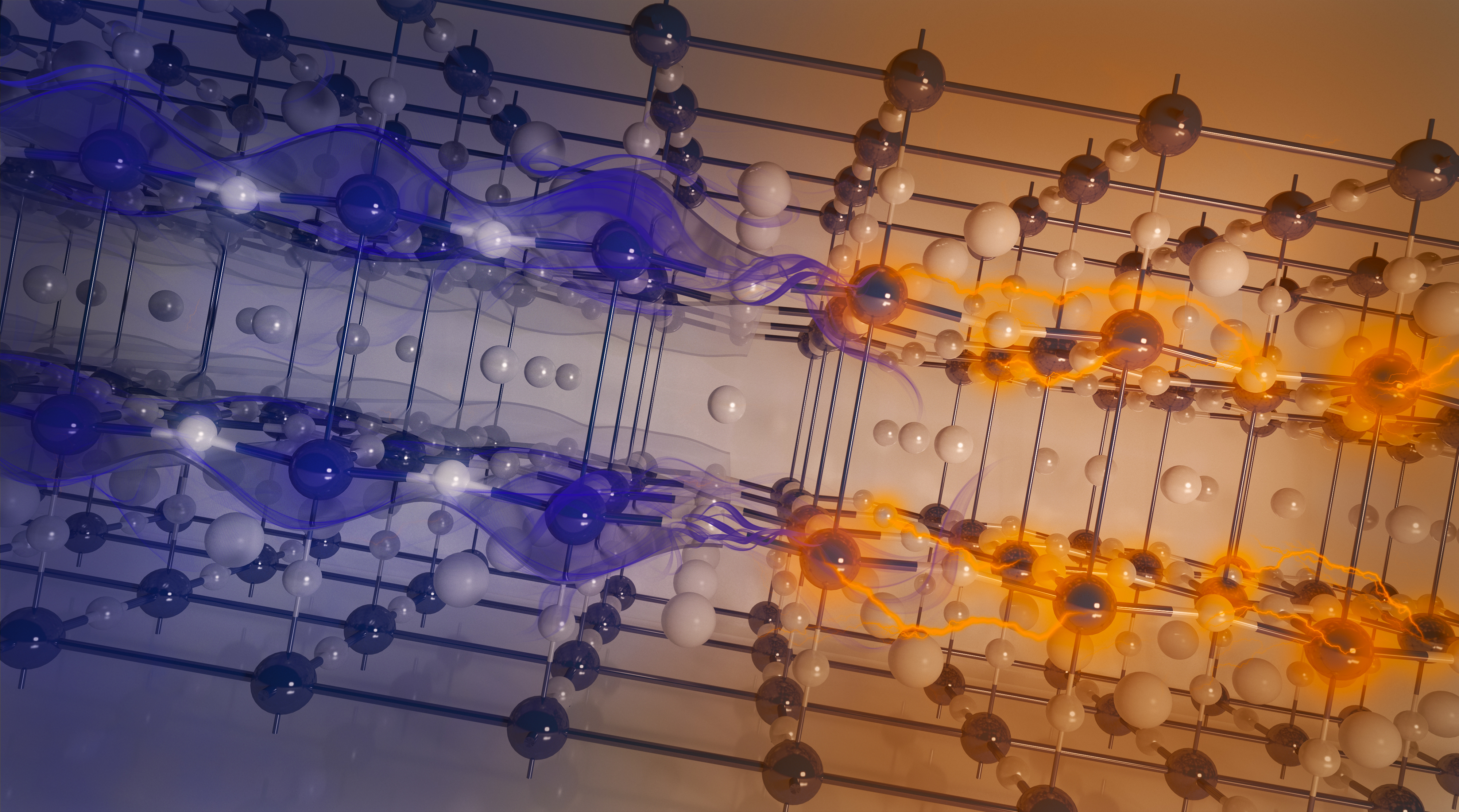
Quantum materials bring together a variety of problems at the border between physics, materials science and engineering. The properties of these systems are uniquely defined by quantum mechanical effects which persist at high temperatures and macroscopic length scales. Some examples are unconventional superconductors, topological insulators, Weyl semimetals.

Superconductors
Superconductors are quantum materials which allows to transport a zero resistance electrical current while being perfect diamagnet (i.e. they expel magnetic field from the interior).

3D Topological insulators
Topological insulators form a new class of quantum matter with an insulating bulk and metallic Dirac surface states protected by topology.

Nanodevices
Nanodevices are fabricated in the cleanroom of our department at Chalmers using state of art tools. Quantum materials in form of nanobelts, heterostructures and very thin films are nanopatterned to study basic physics effects and to realize a variety of quantum limited sensors. Examples are SQUIDs, single photon detectors and charge pump. Dimensions down to 10 nm are achieved.

Transport measurements
The transport in quantum materials is investigated in our measurement lab via: electric resistivity as a function of temperature and magnetic field; RF and microwave measurements; Magnetic field/flux sensing; Hall measurements and high voltage gating effects.

Low temperature – High magnetic field
Cryogen free dilution refrigerator with base temperature of 18 mK and persistent magnetic field up to 12 T. 3He dipstick with base temperature of 300 mK and magnetic fields up to 30 mT. Dipstick for characterization in liquid helium (T=4.2 K) and liquid nitrogen (T=77 K) with magnetic fields up to 10 mT. Quantum Design Physical Property Measurement System with base temperature of 1.9 K and magnetic field up to 14 T.

Spectroscopy
The crystal structure of the quantum materials is investigated via non-resonant X-ray diffraction. Their electronic structure, which includes a very broad class of intrinsic excitations (driven by charge, spin, lattice, orbitals), is probed via synchrotron-based X-ray spectroscopies, which include resonant X-ray scattering, performed in several European facilities (ESRF, DLS, BESSY II).

Highlights
A new way to control quantum materials
Read our last paper on Science
The article, ‘Restored strange metal phase through suppression of charge density waves in underdoped YBa2Cu3O7–δ’, is based on a research led by our group, in collaboration with researchers from Politecnico di Milano, University La Sapienza, Brandenburg University of Technology and the European Synchrotron facility (ESRF).
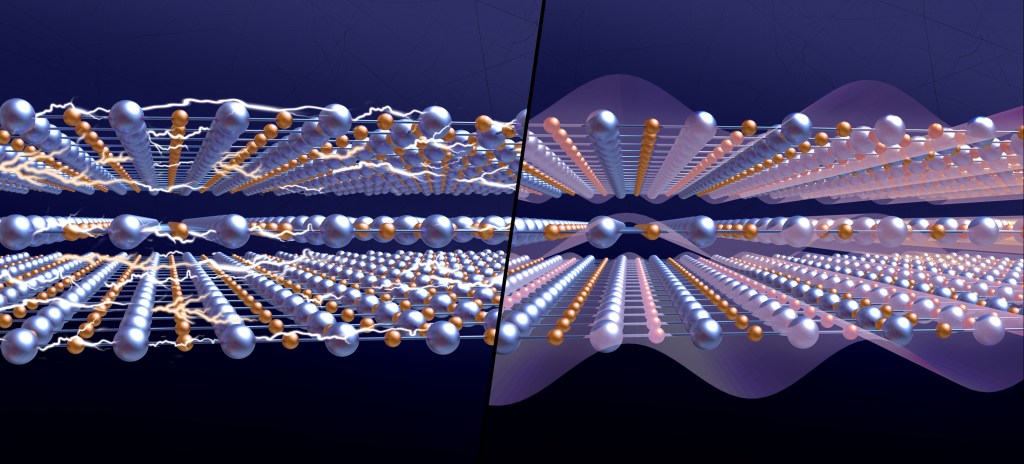
The presented research focuses on understanding and controlling the enigmatic state called ‘strange metal’, appearing in high temperature superconductors at temperatures above the superconducting transition.
The main result of the paper is new evidence of an intimate connection between the strange metal state and a “directional” local charge modulation in the conducting electrons called charge density waves (CDW). More specifically, the strange metal state is suppressed by the appearance of these charge modulations, providing valuable insights into the possible mechanism behind this enigmatic state.
The experiment also shows that CDW can be controlled by applying strain to the material, leading to a novel technique of using strain to turn the strange metal state on or off. This is the first step towards a systematic study of ultra quantum matter in the lab, where strain control can be used to manipulate this new class of quantum materials.
News
EVENTS/GRANTS
KAW Scholar

Floriana Lombardi is appointed as a Wallenberg Scholar in 2024. With the grants from the Knut and Alice Wallenberg Foundation over a five-year period, she aims to use modern nanofabrication techniques inspired by the new physics of 2D materials to solve the mystery of high-temperature superconductors based on copper oxide. The complete list of 118 researchers appointed as the KAW Scholars is available here.
TOPOLOGICAL INSULATORS
PhD opportunity
We’re happy to announce a new PhD opportunity jointly hosted by RISE Research Institutes of Sweden and our group. The project focuses on Weyl semiconductors and aims to develop a topologically protected single-electron charge pump — a promising route toward future quantum current standards. Interested candidates are encouraged to apply here or reach out to us for additional information.
Quantum Confinement and Coherent Transport in Bi2Se3 nanoribbons
Our paper, titled “𝐐𝐮𝐚𝐧𝐭𝐮𝐦 𝐂𝐨𝐧𝐟𝐢𝐧𝐞𝐦𝐞𝐧𝐭 𝐚𝐧𝐝 𝐂𝐨𝐡𝐞𝐫𝐞𝐧𝐭 𝐓𝐫𝐚𝐧𝐬𝐩𝐨𝐫𝐭 𝐢𝐧 𝐔𝐥𝐭𝐫𝐚𝐭𝐡𝐢𝐧 𝐁𝐢₂𝐒𝐞₃ 𝐍𝐚𝐧𝐨𝐫𝐢𝐛𝐛𝐨𝐧𝐬” explores how reducing the thickness of topological insulator nanoribbons down to 10 nm reveals fascinating quantum transport phenomena – from Altshuler–Aronov–Spivak orbits and Shubnikov–de Haas oscillations to quantized conductance features. Using a simple, catalyst-free physical vapor deposition method, we demonstrate a controllable and reproducible way to grow ultrathin Bi₂Se₃ nanoribbons with strong evidence of surface-state-dominated transport.
HIGH Tc SUPERCONDUCTORS
Charge density fluctuations shed light on the strange metal phase
Read our new article, ‘Signature of quantum criticality in cuprates by charge density fluctuations’, just published in the leading scientific journal Nature Communications. The research has been the result of a joint effort between QManD and the group of Prof. Giacomo Ghiringhelli at Politecnico di Milano, in collaboration with University La Sapienza, Peking University, the European Synchrotron facility (ESRF), Diamond Light Source and BESSY II.
The normal state of cuprate superconductors exhibits a “strange metal phase” characterized by highly unconventional properties, including a linear dependence of the resistivity with temperature. The observation that superconductivity intensifies when the strange metal phase is more robust holds the promise of revealing the fundamental mechanisms driving superconductivity in cuprate superconductors.
This enigmatic phase of matter is believed to arise from the presence of a quantum critical point (QCP) at zero temperature. A QCP is a singularity at a temperature of 0 K (−273.15°C), signalling a quantum phase transition between different states of matter. Reaching the absolute zero to directly observe the QCP is practically impossible. Nevertheless, when one gets closer to a quantum critical point, quantum fluctuations emerge. The detection of these fluctuations, which have remained elusive until now, is crucial to confirm if the physics of a strange metal is ruled by a QCP scenario and, in the affirmative case, to determine its true nature.
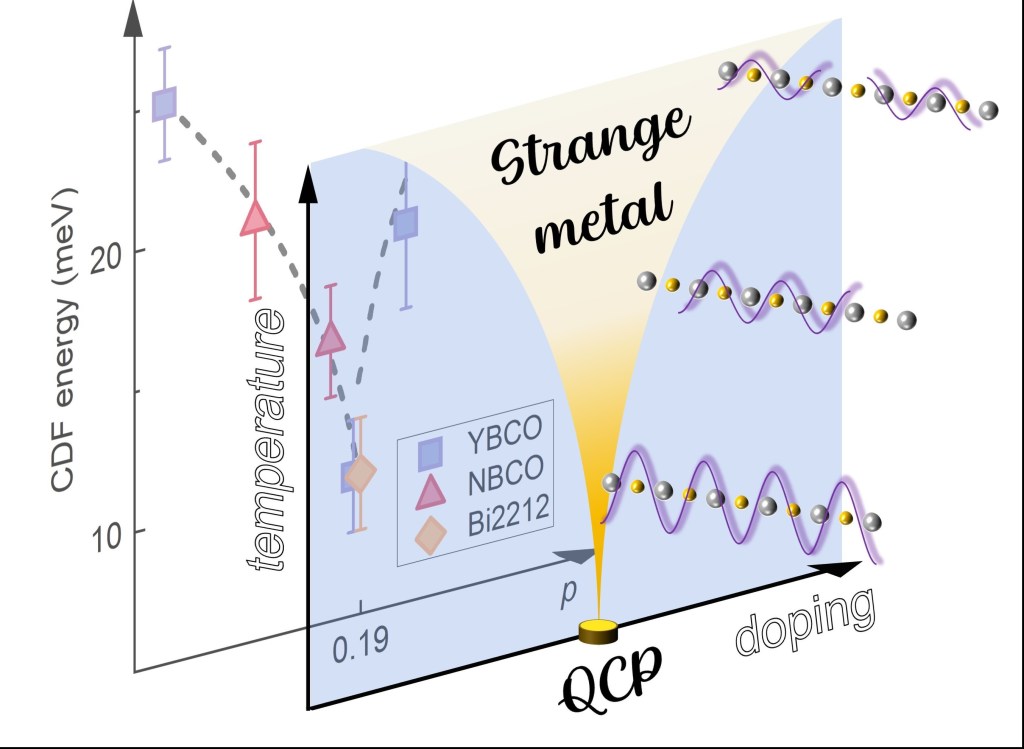
In this work, the recently discovered charge density fluctuations (CDF) were investigated using resonant inelastic X-ray scattering (RIXS) measurements across a broad range of doping levels and temperatures.
The experiments reveal a crucial finding: as the temperature approaches absolute zero, at a specific critical doping level of p* ≈ 0.19, the putative QCP, the intensity of CDF reaches its maximum, while the characteristic energy of these fluctuations is minimal (see Figure). This phenomenon creates a unique wedge-shaped region in the phase diagram as a function of doping, providing strong evidence of quantum critical behaviour.
These results unveil the connection between the strange metal phase and quantum criticality, and support the crucial role of charge order in driving this unconventional phenomenon. Ultimately, these interconnections introduce new insights into our understanding of high critical-temperature superconductivity.
Read more about our paper here!

Contact us


Quantum Device Physics Laboratory
Department of Microtechnology and Nanoscience
Chalmers University of technology
Kemivägen 9, 412 58 Göteborg
SWEDEN
Funding

 QManD
QManD 